Greenwood Rising: Black Wall St History Center
After a century of silence, the story of the 1921 Tulsa Race Massacre will be shared with the nation
In 1921, a group of white residents in Tulsa, Oklahoma destroyed the thriving African American neighborhood of Greenwood, known as Black Wall Street, flattening over 35 blocks and killing over 300 people. The incident known today as the Tulsa Race Massacre was covered up by the state and federal government, and is often not taught in American schools. The 1921 Tulsa Race Massacre Centennial Commission tapped Local Projects to develop an exhibition space that will tell the story not only of the Massacre itself, but also of the remarkable and resilient Greenwood community.
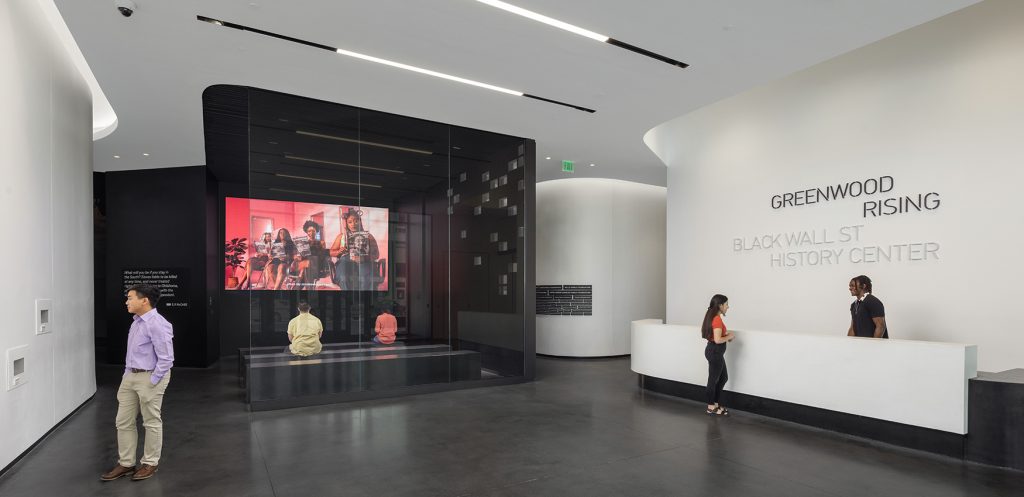
A film welcomes visitors to the Greenwood District, a community whose history as a Black business mecca and the site of racial violence is matched by its resilience and strength. Featuring Maya Angelou’s iconic poem Still I Rise, and created by Tulsa-based filmmaker Trey Thaxton, the film features Greenwood community members and business owners, juxtaposing past and present stories of success and hope.
Upon entering Greenwood Rising’s lobby, visitors peer through windows into the district’s past that morph into contemporary views of the same place, evoking critical thought about progress in the community.
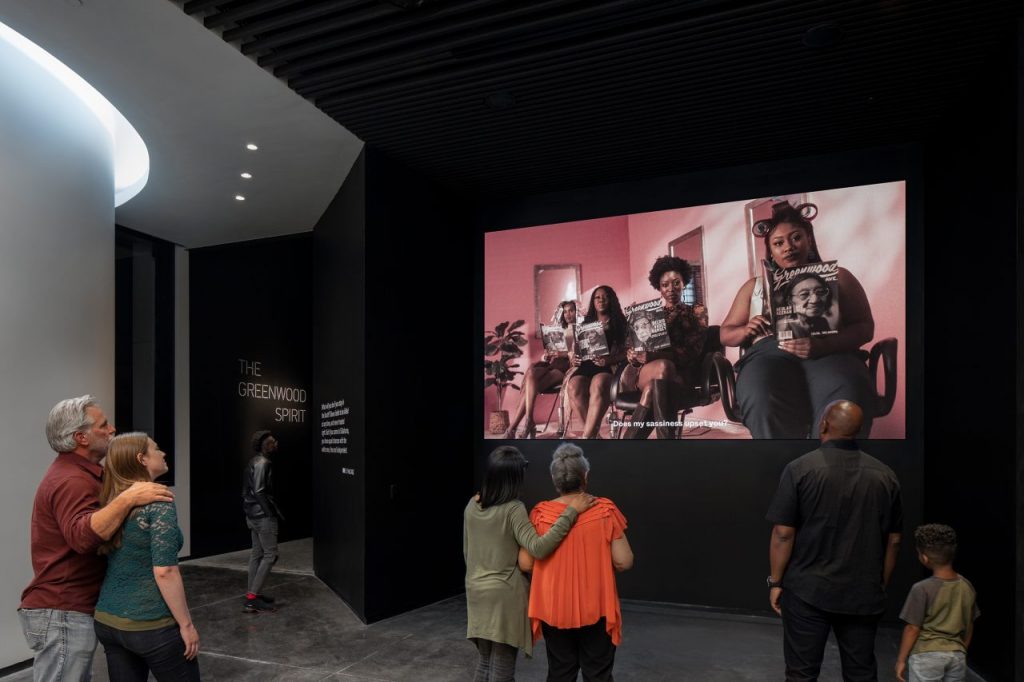
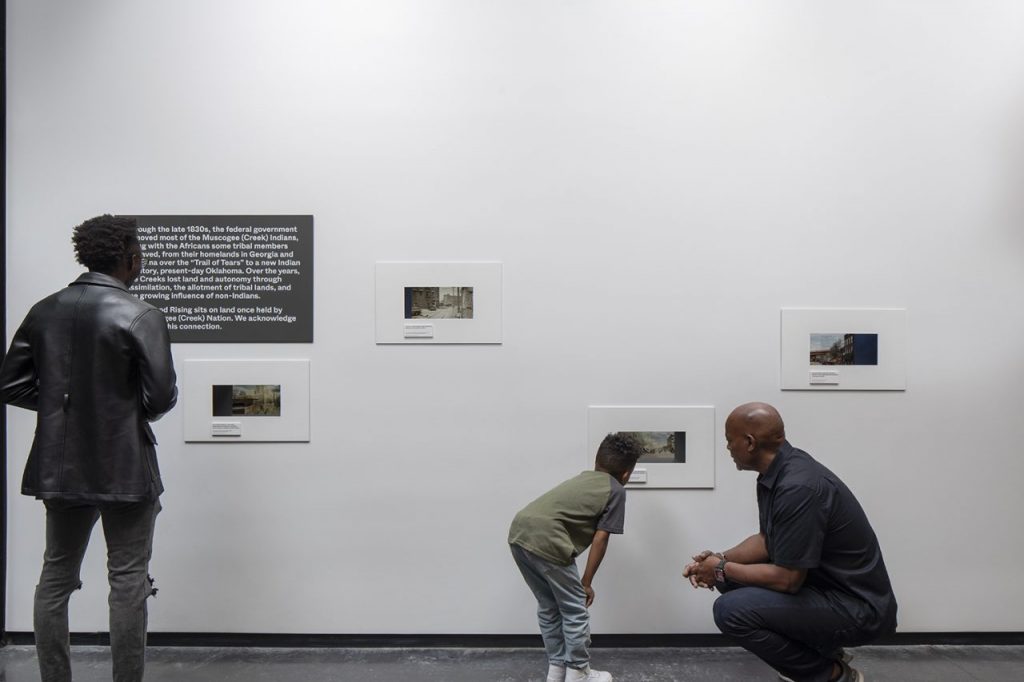
This Greenwood Spirit section explores the early placemaking of Greenwood — how and why the African American community came to this place, the struggles they faced, and the ways in which they succeeded in building this vibrant and wealthy community, even in the face of systemic racial oppression.
A period barbershop comes to life with holographic barbers who engage the visitors with the hopes, dreams, and activity of folks in early Greenwood. Barbers relay stories of past customers and their businesses, explaining the history of Greenwood and instilling community values into the visitor as reflected in the oral histories of hard work and success.
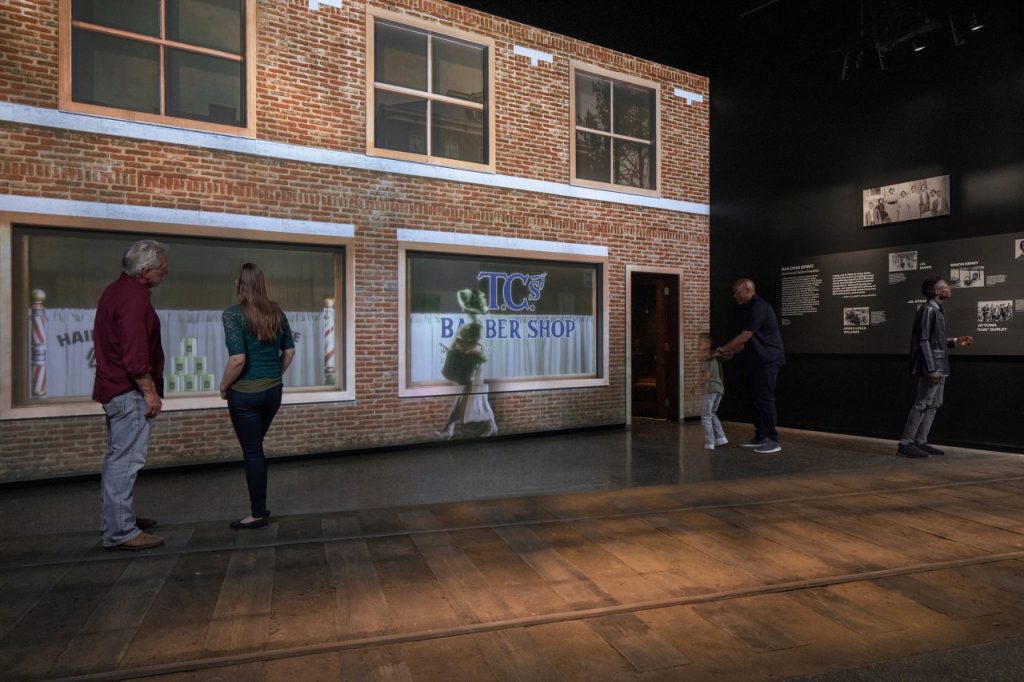
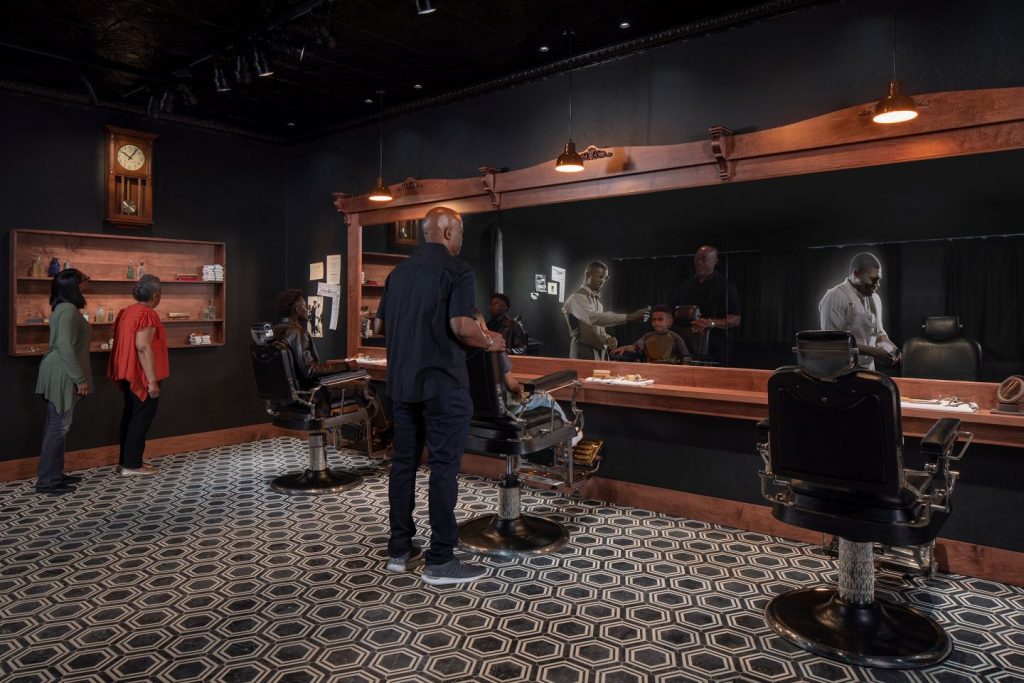
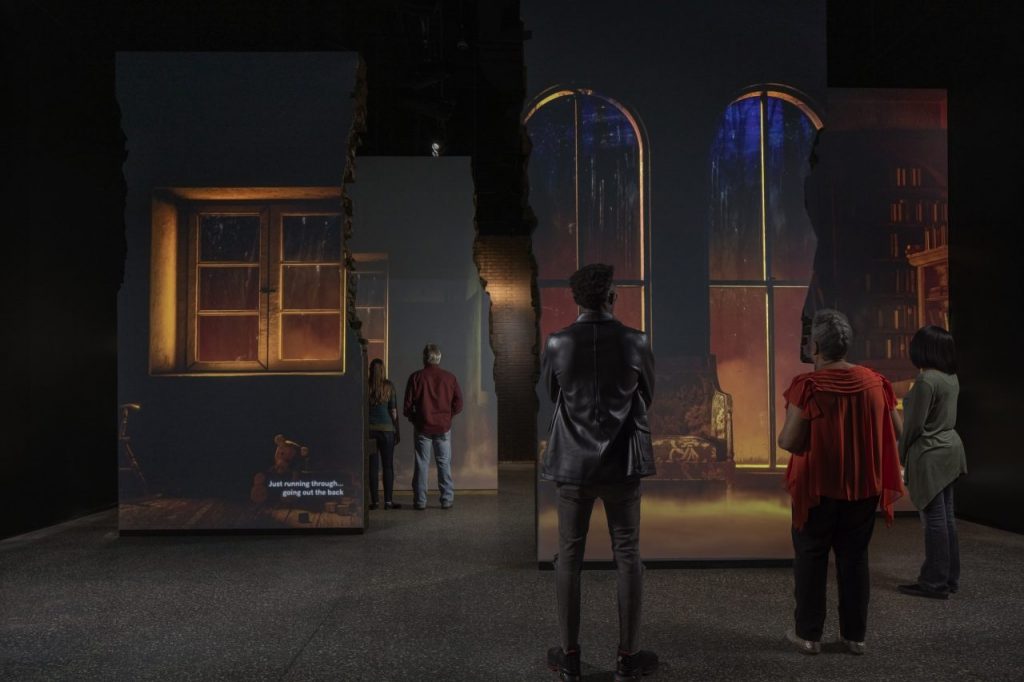
This exhibit brings to life the horrors of the 1921 Tulsa Race Massacre, immersing visitors in the minute-by-minute accounts from survivors and memories from descendants. Told from the perspective of survivors, the humanity and despair frames the photographs of crumbling businesses and burning homes that witnessed the destruction of a thriving African American community. First person accounts taken from interviews with survivors like Eddie Faye Gates weave together the black experience of the Massacre.
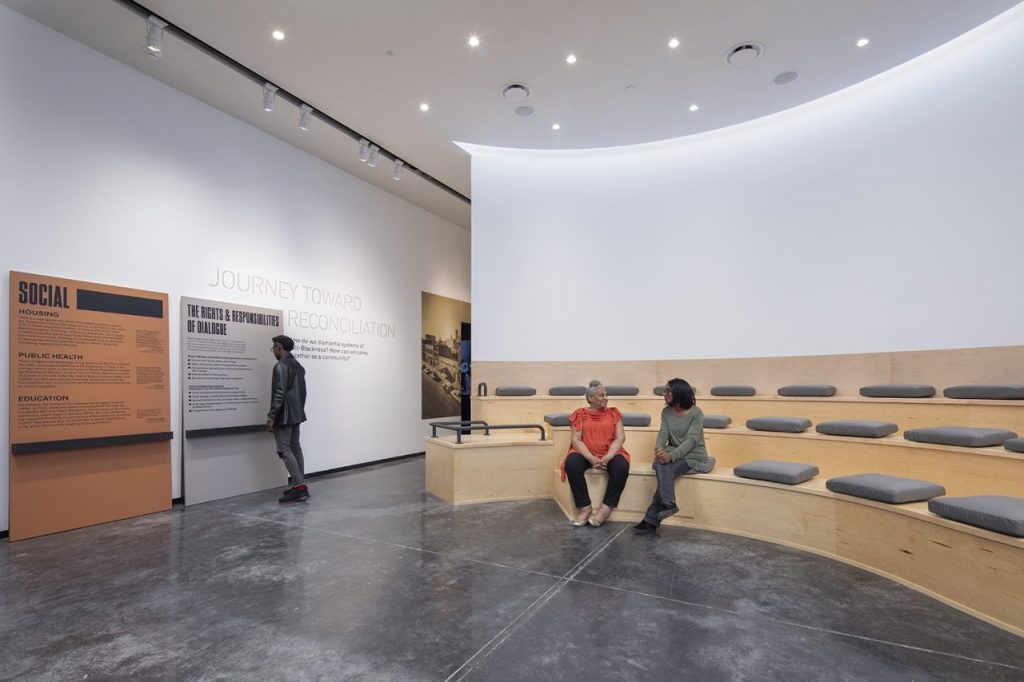
Greenwood Rising’s final space focuses on restorative justice and contemporary issues of anti-Blackness. Flexible media and graphics inform an environment designed for dialogue and ongoing personal and community work.
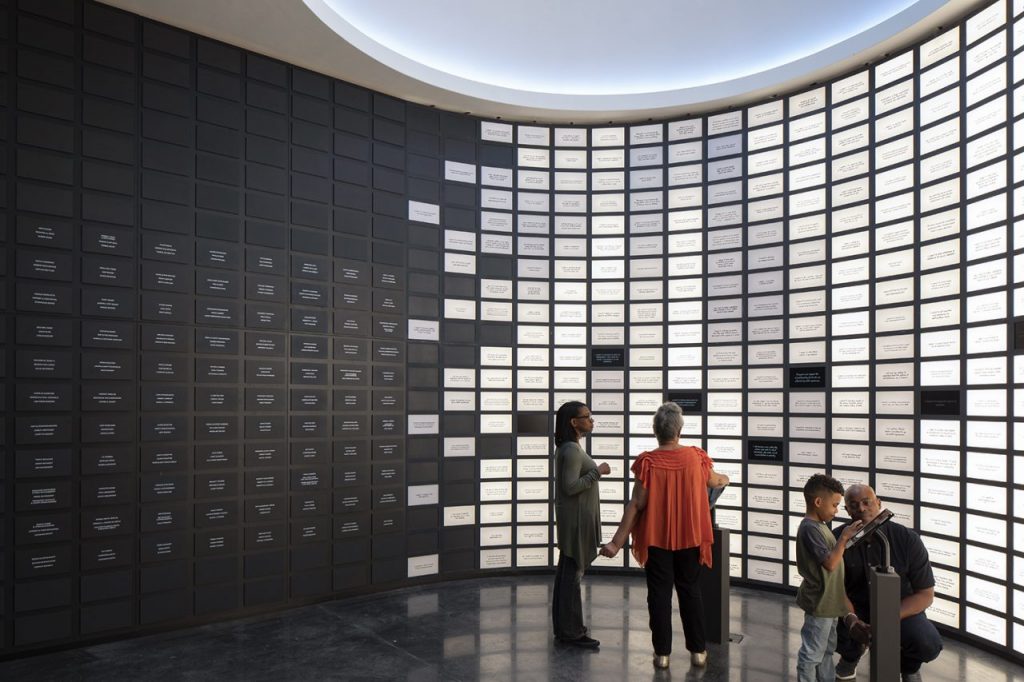
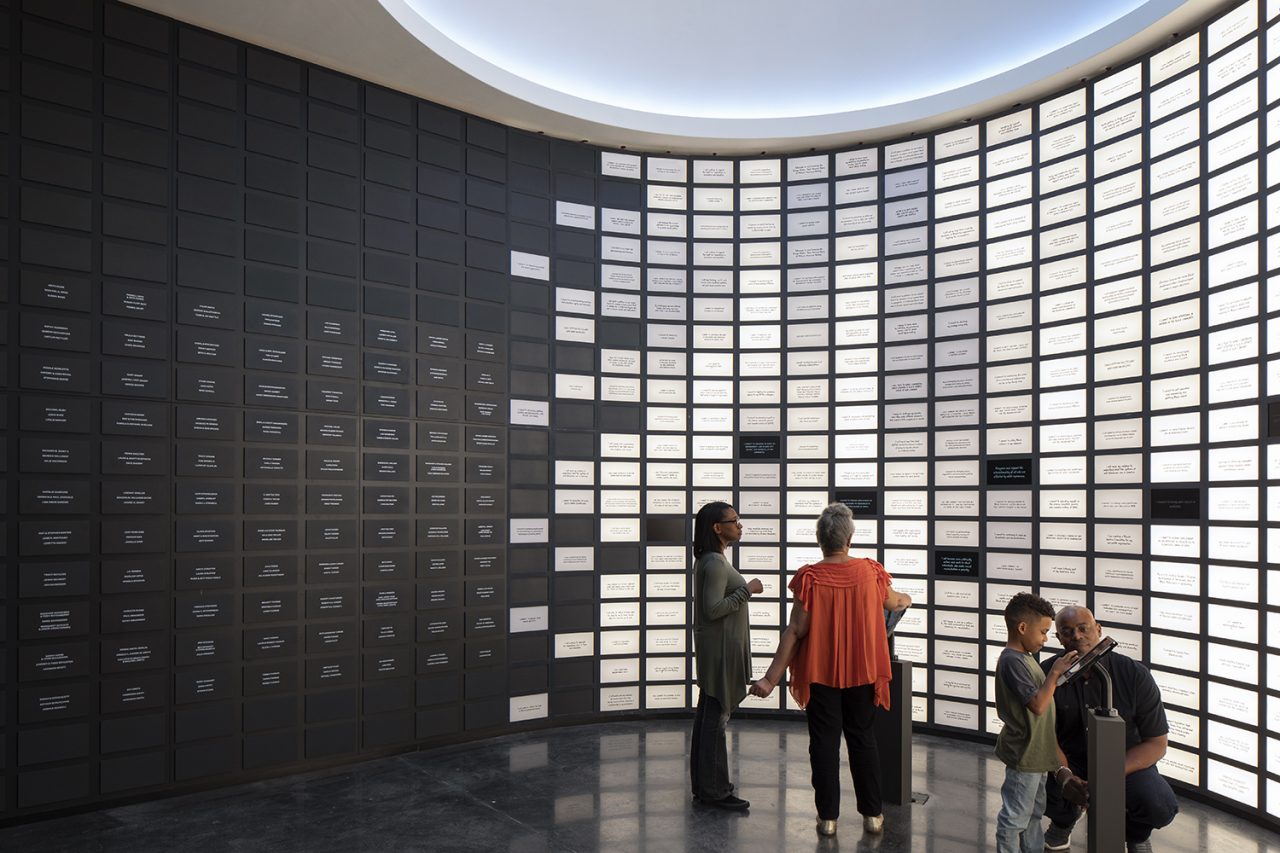
Visitors end their journey by making a personal and actionable commitment toward racial reconciliation. A brick lights up upon submission, adding visitors’ voices to the community wall of past commitments, which extends into a display of grassroots donor plaques.